
About the Author – Uncover the Truth: Stop Persistent Bots with New Tactics
A few years ago, whenever I faced issues with credential stuffing, automated email form fillers, or bin surfing on web applications, my immediate solution was simple: implement reCAPTCHA or one of its alternatives. It was a reliable go-to. But lately, what I’ve been witnessing is unsettling. Over the past few months, I’ve seen firsthand how these once-dependable technologies are losing their edge. Just like any tool, someone eventually finds a way to exploit its weaknesses. And now, it feels like we’re standing at a turning point. Are we witnessing the end of an era? Or is this a wake-up call for reCAPTCHA providers to outpace these bad actors again?
For those unfamiliar with reCAPTCHA, I want to break down its purpose and the challenges we’re up against. reCAPTCHA, developed by Google, is a security tool that helps websites distinguish human users from bots. Using machine learning and behavioral analysis, it monitors subtle actions, like mouse movements and time on the page, to assess user legitimacy. While reCAPTCHA still holds its place in the market, other companies, such as Cloudflare with its Turnstile, have introduced their versions, each striving to balance user experience and security. These tools are essential for protecting sensitive data, preventing spam, and mitigating fraud, enabling businesses to maintain digital trust while tackling evolving cybersecurity threats.
Evolving Tactics of CAPTCHA Solving Bots
In my daily work as a cybersecurity professional, I’ve seen how quickly CAPTCHA defenses are losing ground. A few years back, it was enough to rely on reCAPTCHA to fend off bots, but today’s bots have evolved. Using advanced AI and machine learning, they now mimic human behavior so convincingly that even reCAPTCHA struggles to tell the difference.
These bots don’t just click and scroll randomly; they replicate the subtleties of real user interactions. Trained on human behavior data, they follow natural patterns, pausing like a person would, scrolling at believable speeds, and even taking time to “read” content. Some bots can even handle image-based challenges by leveraging sophisticated image recognition and identifying traffic lights or crosswalks more accurately than a typical user.
Even more concerning is the rise of CAPTCHA-solving services that combine automation with real human input. When a bot encounters a particularly tough CAPTCHA, it can send the challenge to a human solver, effortlessly bypassing the test. This loophole undermines the very purpose of these security tools.
Watching these tactics evolve firsthand has been eye-opening. What was once a reliable line of defense has become increasingly vulnerable, forcing us to rethink our approach. We’re in a race against rapidly advancing bot technology, and reCAPTCHA is no longer the end-all solution it used to be. The question is, what comes next in this fight to keep bad actors at bay?
Implications of High Scores for Bots
I noticed something surprising in my recent tests: even when I purposely tried to fail the reCAPTCHA, I still scored 0.889. Despite failing, the system could tell I was human. This reveals an interesting aspect of reCAPTCHA’s scoring: it’s not solely based on whether you solve the puzzle correctly. Instead, it’s assessing a range of behaviors and subtle signals, looking for a “human touch.”
The troubling part? Many bots are now achieving scores even higher than mine, reaching up to 0.9. These aren’t human, yet they score at levels that signal genuine users. With this scoring approach, bots are increasingly capable of slipping through, creating vulnerabilities in systems meant to keep them out.
This loophole is a growing concern for cybersecurity. High-scoring bots compromise the reliability of reCAPTCHA, undermining its effectiveness as a security measure. And it’s not just about access; it’s about the erosion of trust. Users expect these tools to filter out threats, not let them in. As bots evolve, we must reconsider what makes someone (or something) “trusted,” or we risk leaving doors open to precisely the kind of automated attacks we’re trying to block.
Human Data and Behavioral Biometrics
I’ve seen how reCAPTCHA relies on analyzing user behavior, such as mouse movements, click patterns, and even the time spent hovering over certain elements. It’s all part of a strategy to spot “human” behavior and separate it from bots. But the problem is that bots are learning fast, and they’re learning from us.
With access to vast amounts of human data, bots are now trained to mimic these behaviors almost perfectly. They can replicate the subtle movements and pauses that typically signal a real user. They know to move the mouse in a slightly jagged line, to click with a slight delay, or to “read” a page naturally. It’s becoming harder to differentiate between a real user and a well-trained bot.
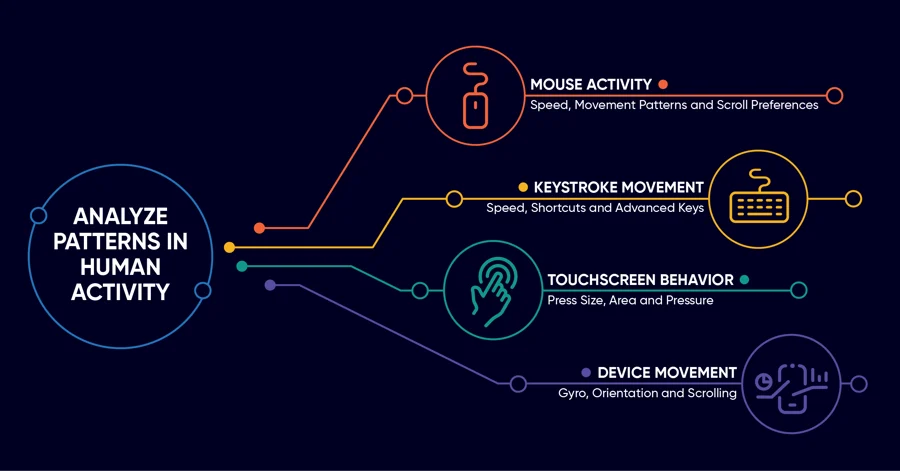
The result? The line between human and bot is blurring, and reCAPTCHA’s methods are starting to fall short. Bots can look just as “real” as actual users, which means reCAPTCHA can often not make the distinction it was designed for. This weakness leaves websites and applications more vulnerable to automated attacks, as these bots slip through the security measures undetected.
What concerns me is that this isn’t just a flaw in reCAPTCHA; it’s a broader issue with relying on behavioral biometrics alone. These security measures must evolve as bots learn to study and replicate human data. Otherwise, we’re facing a future where bots can pass as humans, and the security lines we’ve drawn will no longer hold.
Security vs. Usability Trade-Offs
One of the biggest challenges I face with CAPTCHA systems is the constant tug-of-war between security and usability. On the one hand, we want to ensure that our security measures are robust enough to keep out bots and protect sensitive data. But on the other hand, we can’t ignore the user experience. No one wants to undergo endless, frustrating tests to prove they’re human.
Many CAPTCHA systems, like reCAPTCHA, have tried to simplify the process to make it more user-friendly. We’ve moved from complex, time-consuming puzzles to single-click “I’m not a robot” boxes and even invisible CAPTCHAs that analyze user behavior in the background. While these changes reduce user friction, they also open up more opportunities for bots to slip through.
What I see in practice is that these simplifications, while great for users, come at a security cost. Bots are evolving to beat these easier tests, taking advantage of our prioritization of convenience. This leaves companies stuck balancing between two risks: if we make CAPTCHA too challenging, we frustrate real users and potentially lose them. But if we make it too easy, we let in bots and expose our systems to automated attacks.
It’s a delicate balance, and the scales are tipping as bots get more sophisticated. For now, we have to weigh the user experience against the need for more robust security, but it’s clear that the current approach isn’t sustainable. We need solutions to protect users without compromising security or convenience, or we’ll continue struggling with this balancing act.
Future of CAPTCHA: Alternatives and Innovations
In the battle against bots, several new solutions emerge as promising alternatives to traditional CAPTCHA. These approaches focus on more sophisticated methods like biometric authentication and advanced behavioral analysis to accurately identify human users. Here are three products leading the way:
- Cloudflare Turnstile
Cloudflare’s Turnstile offers a CAPTCHA-free alternative that analyzes browser and user behavior in real-time to verify legitimacy without disrupting the user experience. It uses machine learning to evaluate numerous data points and adapts its checks dynamically, making it harder for bots to mimic legitimate human actions effectively. - Human Security (formerly White Ops)
Human Security specializes in bot detection and fraud prevention, focusing on behavioral biometrics and machine learning. Their approach includes analyzing mouse movements, typing rhythms, and other unique user patterns that bots find challenging to replicate. This solution is particularly effective in high-stakes applications like ad fraud prevention and e-commerce. - Arkose Labs
Arkose Labs provides a platform that combines behavioral biometrics with a risk-based approach to stop bots. By tailoring challenges based on perceived risk levels, Arkose Labs can adapt to suspicious patterns and make it nearly impossible for bots to proceed without detection. Their system can issue customized challenges that only real users can quickly solve, raising the bar for bot developers.
Looking Forward
These AI-driven alternatives represent a new direction in security: they don’t just test for simple patterns; they delve deeper into user behavior, making it much harder for bots to pass undetected. As bots evolve, these technologies offer a more resilient approach, prioritizing user experience while keeping bad actors at bay. In the future, combining these behavioral and biometric methods with continuous machine learning updates will be essential in staying one step ahead of the bots.