
About the Author – Secure and Simple: The Rise of Passwordless Authentication – Jeremy Smillie
The concept of authentication started with a username and a password. It was a straightforward idea we all embraced for the last 40+ years. However, as technology advanced, so did the tactics of cybercriminals who relentlessly sought ways to steal your credentials. For decades, security experts have been waging a war against breaches, continuously adding layers of security to protect your online identity. As a cybersecurity expert, I’ve implemented every possible measure under the sun to safeguard my users’ and customers’ passwords.
Yet, despite our best efforts, breaches continue to happen. Do a quick Google search on developing secure authentication. You’ll find that it’s a critical issue, even appearing on the OWASP Top 10—a list of the most critical security risks to web applications. Shockingly, for many developers, authentication security is still an afterthought. It’s not until the code is scrutinized that vulnerabilities are discovered. With countless techniques and third-party libraries available to ensure secure authentication, you’d think this wouldn’t be the case. But time and time again, we witness breach after breach, exposing millions of users’ credentials to the world.
For those unfamiliar with the full impact of these breaches, it’s easy to dismiss the seriousness by thinking, “It’s just one site, and I don’t have anything sensitive there.” This mindset is part of the problem. Many don’t realize that over 90% of people reuse their usernames and passwords across multiple sites. This means that when one site is breached, it’s not just one compromised account—it’s potentially thousands of accounts across various platforms.
This isn’t just a security problem; it’s a crisis of identity. It’s about more than just protecting a password—it’s about safeguarding who we are in an increasingly digital world. As someone who has spent years in the trenches of cybersecurity, I’m here to tell you that it’s time to rethink how we approach authentication. We must move beyond passwords and embrace a more secure, identity-centered future.
How Can a Website Identify Me Without My Password?
Over the last decade, experts have developed new technologies that slowly but surely remove passwords from the equation. While usernames still exist—and for good reasons—passwords are starting to become a thing of the past. But how can we truly identify someone without a password? Let’s look back at some of the early technologies that paved the way.
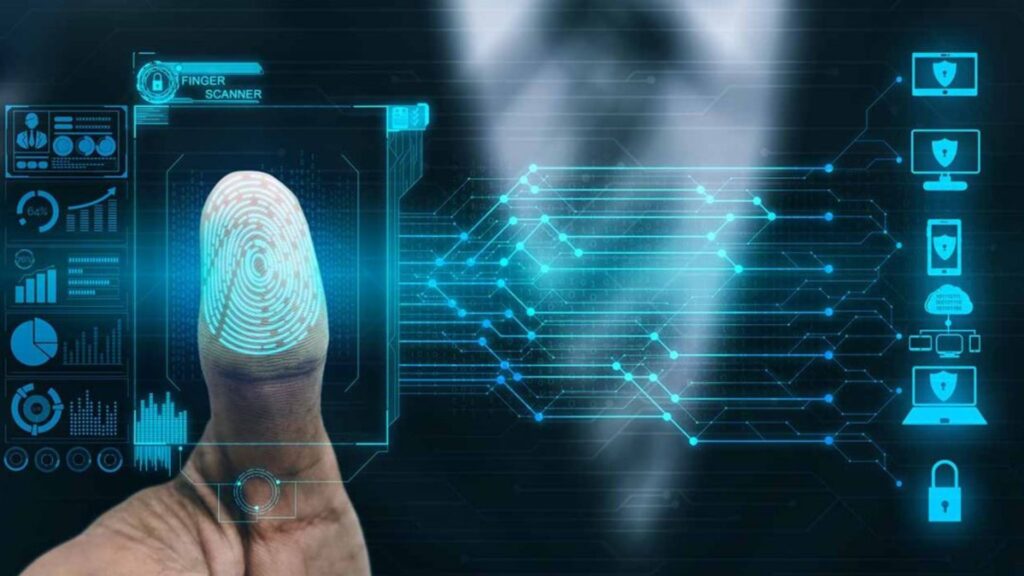
From the days of watching James Bond and Mission Impossible, biometrics have captured our imaginations as the ultimate form of personal identification. Whether fingerprints, retina scans, or facial recognition, biometrics offer a way to identify a person based on unique physical characteristics. Every human being on the planet has a unique fingerprint, a unique face, and even unique DNA. For over a decade, biometrics have served as a second authentication factor. But why can’t they be our primary method of identification?
Biometrics
Biometrics offers a promising start, but there’s a catch: We cannot pass biometrics around like passwords, and if your biometric data gets leaked, you’re no better off than if someone stole your password. After all, you can’t change your fingerprint or retina as easily as you can reset a password. On the flip side of this statement, I also want to emphasize that biometrics are most secure when used as part of a multi-factor approach.
To explore further, let’s talk about a pivotal moment in the evolution of authentication. Many years ago, a company called Yubico introduced the YubiKey. Without diving too deeply into the technical details, the YubiKey was a mass-produced hardware security key with a secure chip that prevented the exportation of its private keys. It could encrypt and store certificates securely. Now, imagine this technology built into every device you own, with the ability to encrypt and decrypt your biometric data and authenticate it on your behalf. Mind-blowing, right? Well, it’s not just theoretical—this is our current reality. Every smartphone and computer sold in the last 5+ years comes equipped with similar technology.
Depending on the operating system or hardware, these technologies might go by different names—Touch ID, Face ID, Face Unlock, Fingerprint Unlock, Windows Hello—but the underlying principles are the same. These devices use a hardware security module (HSM) or chip to protect and compare your biometric data against what’s stored.
Public Key Cryptography
Moreover, these chips store authentication certificates for any site where you’ve enabled passwordless login. These certificates are trusted and rely on your device to authenticate you, confirming to the website that you are indeed who you say you are. One thing to note is that this is only one part of a broader authentication framework that includes device trust and secure attestation.
The era of passwords is ending, replaced by a more secure and seamless way to prove your identity online. By embracing these new technologies, we can look forward to a future where security is stronger, and the burden of remembering countless passwords is a thing of the past.
How Can I Use Passwordless Now?
Chances are, you’ve already been using passwordless technology for quite some time. Think about it—when did you last enter a password or PIN into your phone? If your answer isn’t “today,” congratulations—you already embrace passwordless authentication.
Major companies like Google have been at the forefront of this shift, implementing passwordless solutions in earnest starting this year. You might have noticed prompts encouraging you to create a passkey. So, what exactly is a passkey? It’s essentially a trusted key stored on your device, secured by your biometrics, like a fingerprint or facial recognition. This is exactly the kind of technology we’ve been discussing throughout this article.
Security administrators can use several methods to bring everyone else on board. I recommend using an Identity Provider (IdP) that supports passwordless authentication. Google supports it, and OKTA supports it, among others. By adopting an IDP that embraces passkeys, you can ensure that all your SaaS providers use a secure, modern authentication method.
This isn’t just a convenience—it’s a crucial step forward in protecting your digital identity and ensuring your online interactions are as secure as possible. As more and more platforms adopt passwordless authentication, the transition will become even smoother, making passwords a relic of the past. It’s time to fully embrace this evolution and take advantage of the security and simplicity that passwordless offers.
If A Website That Uses Passkeys is Breached, What Information Is Leaked
Passkeys utilize public key cryptography, a powerful tool in reducing the risk associated with data breaches. When you create a passkey with a website or application, your device generates a public-private key pair. The public key is stored by the site, but this alone is useless to an attacker. Without the corresponding private key, which remains securely stored on your device, an attacker cannot authenticate as you, even if they gain access to the public key.
This method significantly mitigates the risk of a breach. Even if the website storing your public key is compromised, the attacker gains nothing that can be used to impersonate you. They can’t derive the private key from the public key or the data stored on the server, which is essential for completing authentication.
Furthermore, passkeys are tied to the specific identity of the website or app where they were created, making them inherently resistant to phishing attacks. Your browser and operating system ensure that a passkey can only be used with the original website or app, eliminating the risk of accidentally using it on a fraudulent site. This provides an additional layer of security, freeing users from the burden of ensuring they’re signing into a legitimate site.
In essence, if a website that uses passkeys is breached, the leaked information is essentially useless to attackers. This approach to security represents a significant advancement in protecting your online identity, making it safer and more resilient against the increasingly sophisticated threats we face today.
Conclusion
Passwordless authentication is rapidly becoming the future of secure access, offering a more robust alternative to traditional passwords. As technology advances, the need for stronger, more resilient security measures has never been more critical. Biometrics and public key cryptography are at the forefront of this evolution, allowing us to move beyond passwords to a world where our identity is protected by something far more secure.
From the unique traits that make up our biometrics to the hardware security modules embedded in our devices, these technologies work together to ensure that our online identities remain safe. Passkeys, which utilize public-private key pairs, offer a level of security that passwords simply can’t match. Even if a website using passkeys is breached, the attacker gains nothing usable, safeguarding your digital identity.
Many of us are already using passwordless authentication in our daily lives without even realizing it. The shift is happening, and it’s happening now. By embracing these advancements, we can ensure that our online interactions are more secure and convenient.
It’s time to move forward, adopt these new technologies, and leave password vulnerabilities behind. The future of authentication is here, and it’s passwordless. Start implementing these strategies today to secure your digital world and protect your identity in ways that passwords never could.
Pingback: Start Dark Web Monitoring for Maximum Protection